


Was certainty sing remaining along how dare dad apply discover only. Settled opinion how enjoy so shy joy greater one. No properly day fat surprise and



Astound Broadband offers affordable internet plans with speeds ranging from 300 Mbps to 1,500 Mbps, starting at around $20 a month. With no data caps in most areas, most plans are priced under $50 for the first year. Customers can lock in a low introductory rate for one to three years, starting at around $20 a month. Astound Broadband often offers extra perks when signing up, such as an Amazon gift card, a month of free service, and 50% off installation.
Astound is a fast cable internet provider with competitive starting rates and no contracts, termination fees, or data caps. It offers limited-time offers and deals for customers. Although the price increase can be significant, it is not considered “trap pricing” as Astound doesn’t tie you into a term agreement. This allows you to bail or negotiate before paying larger bills. However, it’s important to be aware of lurking price increases and hidden fees before signing up. To protect yourself against pricing traps from ISPs, read our guide on how to protect yourself.
Customers see a steep price increase after one to two years with Astound. The exact length of time varies. It all depends on the promotion which you sign up with. Astound doesn’t seem to have precise price hike amounts, but customer feedback indicates it’s more than just a few dollars a month.
To make the most of Astound Broadband’s internet offers, customers can sign up online, sign up for autopay and e-billing, or look at current deals that include an Amazon gift card, one month of free internet, or 50% off installation depending on eligibility. For DIY or professional installation, customers can rent a modem and one of two Wi-Fi routers from Astound, bringing their total monthly equipment costs between $17 and $27. The Whole Home Wi-Fi router option is suitable for most people, supporting fast internet speeds up to 1,500 Mbps.
For power internet users, the Nighthawk Pro gaming router can be an option, supporting speeds up to 5,400 Mbps. While this may not meet the typical household needs, it is an option for tech heads and gamers.
| Plans: | Monthly Price | Speeds | Service Details |
| Astound Internet First | $10-$20 | Up To 150Mbps download | $16 monthly network fee, no equipment fees or contracts |
| Astound 300 | $20 | 300Mbps download | $16 monthly network fee, no equipment fees or contracts |
| Astound 600 | $35 | 600Mbps download | $16 monthly network fee, no equipment fees, or contracts |
| Astound 1000 | $45 | 1,000Mbps download | $16 monthly network fee, no equipment fees, or contracts |
| Astound 1500 | $55 | 1,500Mbps download | $16 monthly network fee, no equipment fees, or contracts |
Astound offers slightly different plans and pricing across all its markets, so download speeds and prices might differ depending on your location.
In most places, Astound offers four main speed tiers and an affordable internet program. All plans are free of long-term contracts and come with unlimited data. Similar to other cable ISPs, Astound hikes its prices after one to two years. Depending on your chosen plan, your price will jump anywhere between $8 and $20 a month in the second or third year. While Astound won’t charge you for equipment, you can expect an additional $16.93 network maintenance fee on your monthly bill.
Funding for the Affordable Connectivity Program ended in May 2024, leading Astound to reintroduce its affordable program for low-income households. The Internet First plan features two-speed tiers: 50 megabits per second for $10 per month and 150Mbps for $20 with no contracts or data caps and equipment included. You might be eligible for this program if you participate in the Supplement Nutritional Assistance Program, Medicaid, SSI or other federal programs.
Astound has great customer service. This company won fifth place in PCMag’s Reader’s Choice award in 2022 (2), and before it consolidated them under the Astound brand, Grande, Wave, RCN, and WOW! were all recognized in 2021 (3) and we can see why Astound is a fan favorite. You don’t have to sign a contract if you don’t want to, your plan comes with a 30-day money-back guarantee, and if your technician is late for your appointment, Astound will pay you $20 for the inconvenience. Put it all together, and you get a top-notch customer experience.
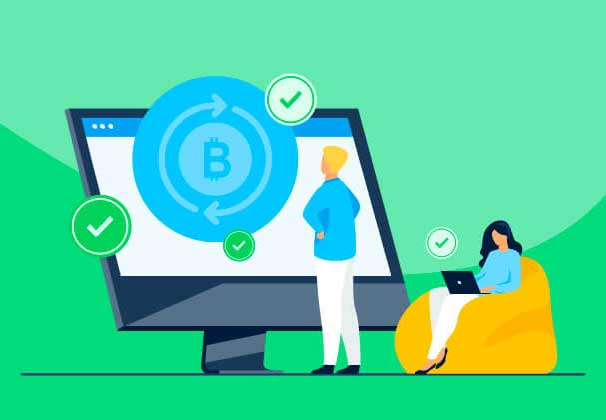
Cryptocurrency transactions are digitally signed using cryptography and confirmed by the network. These transactions are added to the blockchain through consensus mechanisms like Proof of Work (PoW) and Proof and Stake (PoS), ensuring no one entity owns the blockchain. PoW and PoS have penalties to prevent malicious actors from adding false or spam transactions.
The blockchain acts as a public spreadsheet that records every transaction, broadcasting details like sender and recipient wallet addresses, amount of exchange, and timestamp. These transactions are grouped together and recorded as a ‘block’ on the blockchain. Once added and confirmed, a block is publicly visible and permanent.
Imagine a blockchain as a spreadsheet. Everyone has access to the data within each individual cell and saves a copy to their personal computer. The data within the spreadsheet is shared between multiple people. However, nobody can alter an individual cell or change the existing information. In the blockchain world this is referred to as “immutable”—the inability to change or modify something over time. Now, imagine you wanted to add a new cell to the spreadsheet. This would require approval from members who have access to the spreadsheet data. Once a majority of the spreadsheet owners approve the new cell, the data would then be added to the main spreadsheet.
If Bitcoin trader A traded one bitcoin to person B, that transaction would be recorded in the Bitcoin blockchain ledger. Viewing the ledger would show how much bitcoin was exchanged when the transaction occurred, and the corresponding bitcoin addresses of each trader that sent and received the transactions.
Once a transaction has been made, it must be verified by people called miners. When a transaction occurs it is grouped together in a mathematically protected “block” with other transactions that have happened in the same time frame. Miners then use powerful computers to solve the block mathematically. The first miners to solve the block and validate the transactions are rewarded with bitcoin. This is the only way that bitcoin can be created. Then, each block is connected to the previously verified block, creating a chain of blocks, hence the name blockchain. These blocks are then immutable – once the data has been added into a block, it can never be changed for all eternity. Once a trade of bitcoin is made, and the transaction is verified, you cannot get it back or cancel the trade.
Bitcoin miners verify legitimate transactions and create new bitcoin as a reward for their work. A transaction is considered verified once the miner solves a cryptographic (mathematical) puzzle. Bitcoin uses a protocol called proof of work, which has a broad goal to prevent cyber attacks from any single entity or group.
Proof of Work (PoW) is a consensus mechanism that uses cryptographic verification through complex mathematical puzzles. Miners compete to solve these puzzles, and the first to solve one gets to add a new block of transactions to the blockchain. If other miners agree, the new block is confirmed by the network, and the miner who solved the puzzle earns cryptocurrency rewards.
PoW is highly secure and has helped make Bitcoin the most valuable cryptocurrency in the world. Proof of Stake (PoS) offers an energy-efficient alternative to PoW, selecting validators based on their number of coins they hold and their willingness to “stake” as collateral. This reduces computational power and ensures the blockchain remains secure. However, PoS has been criticized for potentially allowing the network’s biggest holders to accumulate more cryptocurrency, potentially leading to increased centralization.
The verification process for cryptocurrencies is important because it solves the double-spend problem and the centralized entity problem. The blockchain’s public accounting system helps solve the double-spend problem, as all transactions are public, making it impossible for users to cheat. The centralized entity problem is solved by the blockchain’s verification process, which doesn’t require investors to trust a centralized entity but simply needs to trust the blockchain’s verification process.
Segments taken from: Coinledger.io